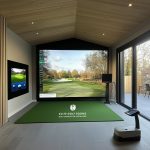
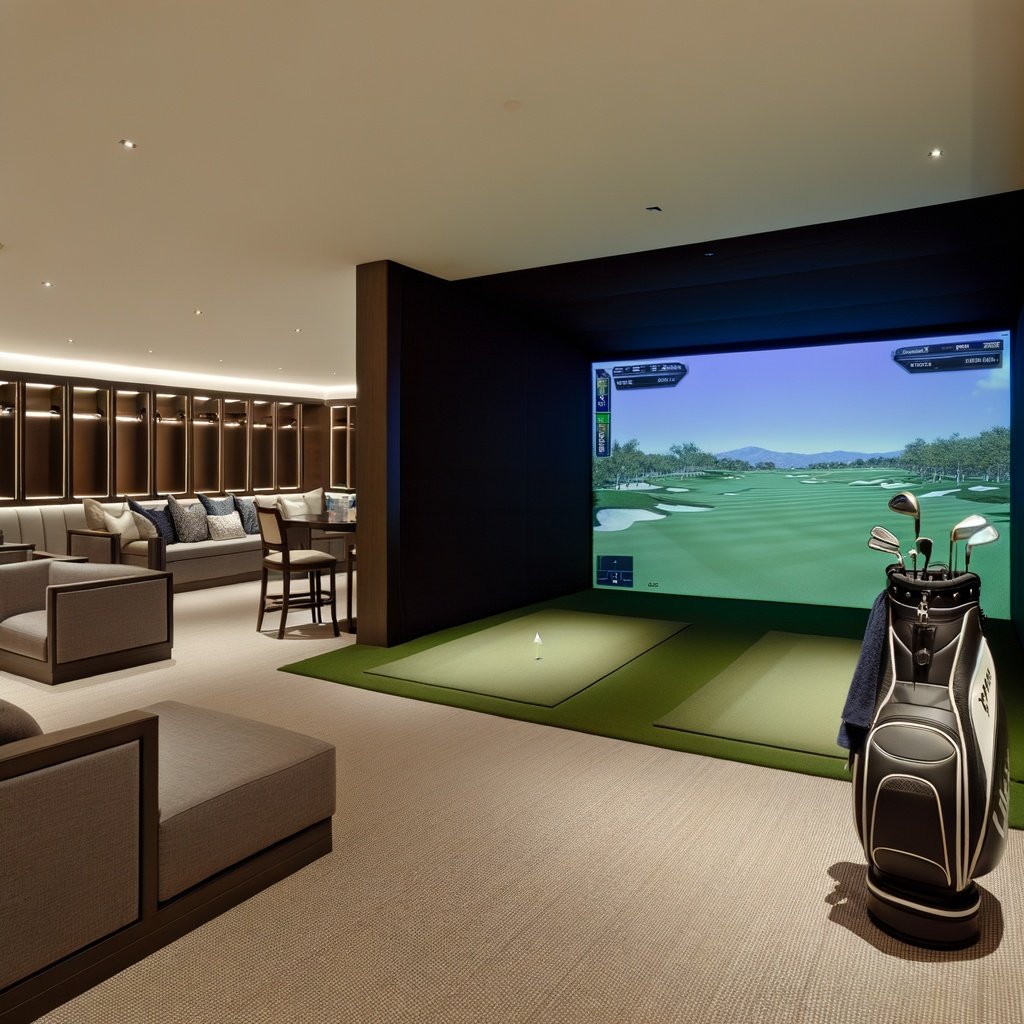
Ceiling height is the one measurement that can make or break a golf simulator room. You can work around width. You can adjust depth. Lighting, layout and screen placement can all be engineered. But ceiling height dictates whether you can swing freely without altering your natural motion. It is the measurement that keeps the room comfortable, safe and enjoyable.
The Ideal Ceiling Height
For most golfers, the ideal ceiling height for a golf simulator is around nine to ten feet. This range gives you enough space to swing your longest clubs with confidence. Drivers, fairway woods and full iron swings all need overhead clearance that still feels natural. When the ceiling is high enough, your swing stays relaxed, and the launch monitor receives clean data.
A ceiling height of ten feet gives the most flexibility, especially if you want a multi-purpose room that blends golf with cinema seating, lighting features or gym equipment. It also allows for the widest range of launch monitor systems and projector positions.
The Minimum Ceiling Height You Can Work With
Some homes simply do not have high ceilings. That does not always mean a simulator is off the table. Many setups can work comfortably with around eight and a half feet of height. This suits golfers with a more compact swing or those who primarily hit irons. It also suits spaces such as loft conversions, outbuildings and garage conversions where ceiling height is limited.
The key is ensuring you can swing your driver without altering your technique. If you find yourself dipping, shortening your backswing or stepping away from centre to avoid the ceiling, the room is too low.
Ceiling Height for Tall Golfers
If you are tall or have a wide, upright swing, extra height is essential. Golfers over six foot two often benefit from ceilings closer to ten feet. This gives enough space to rotate properly without hesitation. The right design team will measure your natural swing arc to determine the exact clearance you need.
Ceiling Height and Launch Monitor Choice
Different launch monitors work best in different height environments. Radar-based systems typically require more depth behind the golfer but are flexible with height. Overhead systems need enough clearance for safe mounting and ball tracking. Camera-based units often give more flexibility in lower rooms.
A well-planned simulator room matches ceiling height to the correct technology rather than forcing unsuitable equipment into the space.
What if Your Room Is Too Low?
Low ceilings can still work if the design is thoughtful. Angled ceilings, beams and uneven heights can be worked around with custom enclosures, strategic equipment placement and compact hitting areas. The goal is to create a space where your swing remains natural and safe.
Rooms that are too low for a driver can still make excellent short-game and iron-focused spaces, which is valuable for technical improvement.
Why Ceiling Height Should Be Assessed First
Ceiling height determines:
- Whether you can swing comfortably
- Which simulator technology is suitable
- How accurate and reliable the data will be
- How immersive the visuals can be
- Whether the room can also double as a cinema or leisure space
This is why we always begin with accurate measurements. Once ceiling height is confirmed, the rest of the simulator design falls naturally into place.
Need Expert Advice on Your Room?
If you are unsure whether your room is suitable for a simulator, we can assess the space, measure the swing arc and advise on the correct design and technology. You can explore how we approach these rooms by visiting the Elite Golf Rooms homepage.